
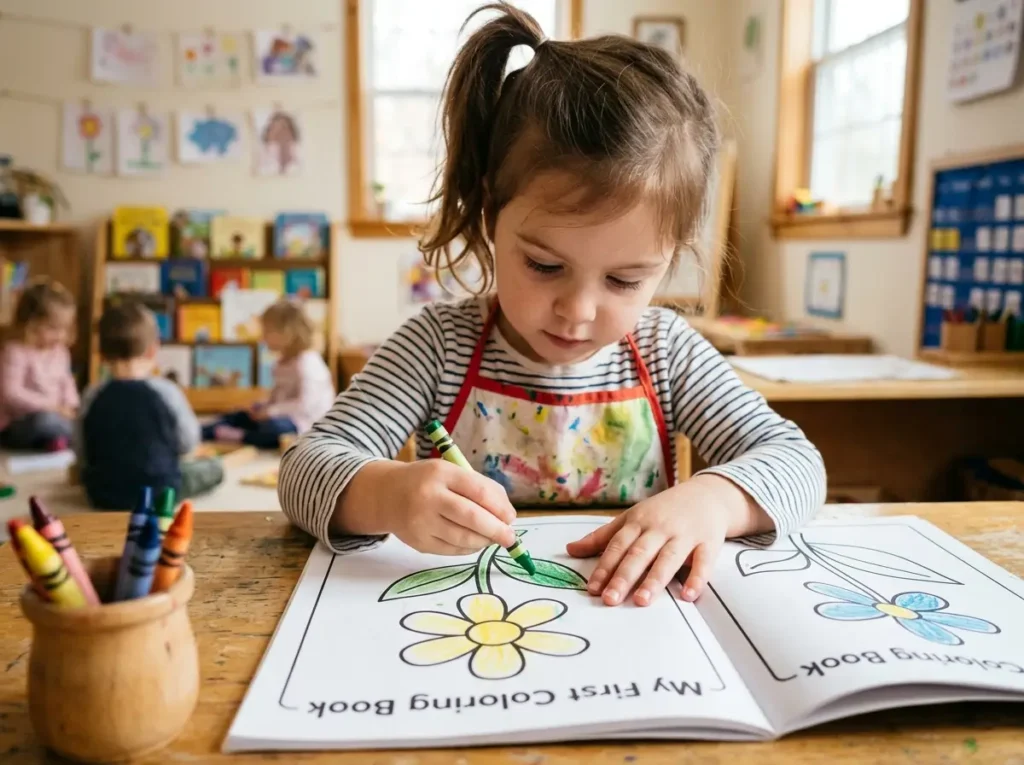

Every parent wants the best for their children. You enroll your children in numerous courses, buy special toys, and look for activities that are both educational and keep them busy. Yet, often, one of the most helpful and productive activities can be something very simple – a new coloring sheet and a box of crayons.
Coloring is a simple-seeming activity. The child sits at his sheet of paper, grabs some crayons, and starts drawing. It really seems very simple, but what you can’t see is the process that’s happening in his brain. This activity develops many skills necessary for further education and personal success. We will discuss how coloring pages support child development in this article.
More Than Just Fun: The Real Value of Coloring
Parents usually think of coloring activities as ways to occupy their children’s time. A kind of rainy-day activity when screen time can get too much. However, this activity can really help in this aspect, but coloring is actually one of the most comprehensive developmental activities out there.
Many studies have shown that creative activities, such as coloring, promote development across various domains simultaneously. The aspects we discuss here include physical, emotional, cognitive, and social development from a single activity.
Let’s now discuss each of these developmental aspects.
1. Fine Motor Skills and Hand Strength
One of the first benefits a child experiences when coloring is the development of fine motor skills. It refers to using the small muscles in their hands and fingers. These muscles will later be used to write, type, button their clothes, tie their shoes, and perform hundreds of other daily tasks.
When holding a crayon or colored pencil, a child is holding and directing a small object. To stay within boundaries (whether this is intentional or not), a child needs to coordinate movements and pay attention to details. Pressing the tool into the paper and moving it in different directions builds strength and improves hand muscle control.
That is why coloring is especially useful for toddlers and preschoolers between the ages of two and five. Their hands are developing during these years, and coloring is a great way to help them grow in a fun way. Once a child enters kindergarten, they can be expected to write better thanks to improved motor skills.
If you are preparing your child for kindergarten, coloring pages would be a great option for a preschool activity.
2. Hand-Eye Coordination
Related to fine motor skills is hand-eye coordination, the ability to control hand movements in response to visual cues. This entire process involves looking at the outline of a shape, understanding where it ends, and then moving the hand accordingly.
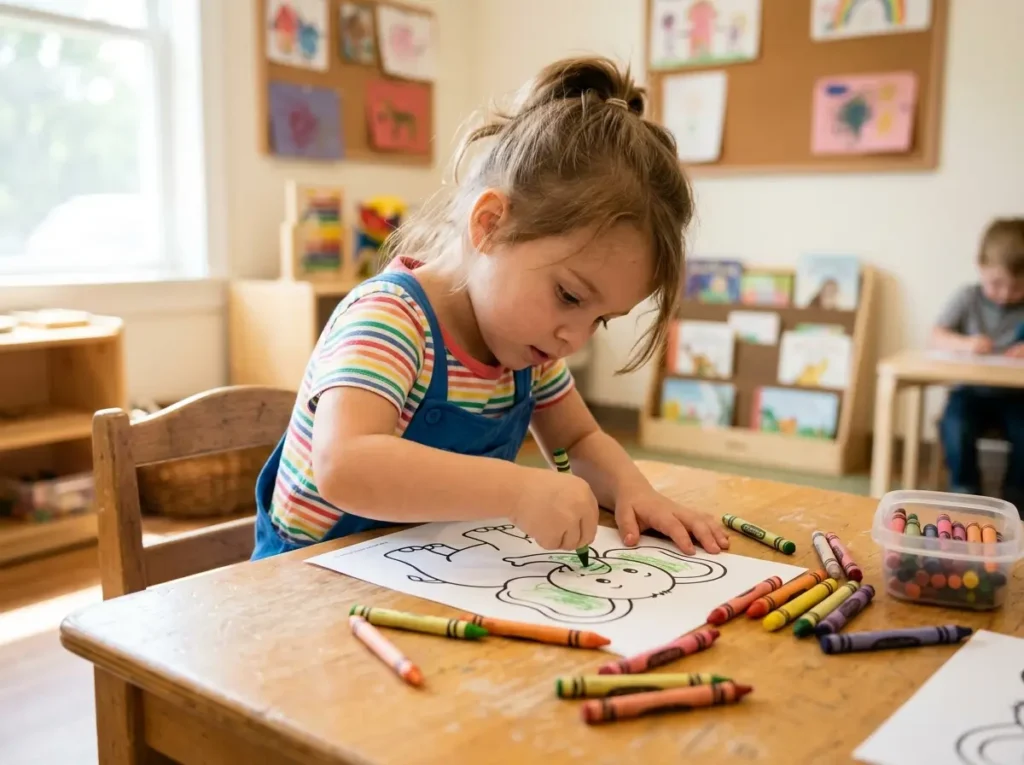
Initially, a toddler may not be able to control their hand movements while drawing or writing, resulting in random, unconsidered movements. That is a perfectly healthy response to coloring activities, although in due course, a child will develop the ability to draw within limits.
Hand-eye coordination is one of those skills that is crucial for several activities, including playing a game of catch or reading some text.
3. Creativity and Self-Expression
There are no wrong answers when it comes to coloring pages. The sky can be purple, the dog can be green, and the dragon can be any color of the rainbow! Allowing children this kind of freedom of expression is important because their lives are full of structure, “right” answers, and rules. Coloring gives children the opportunity to use their creativity and make decisions.
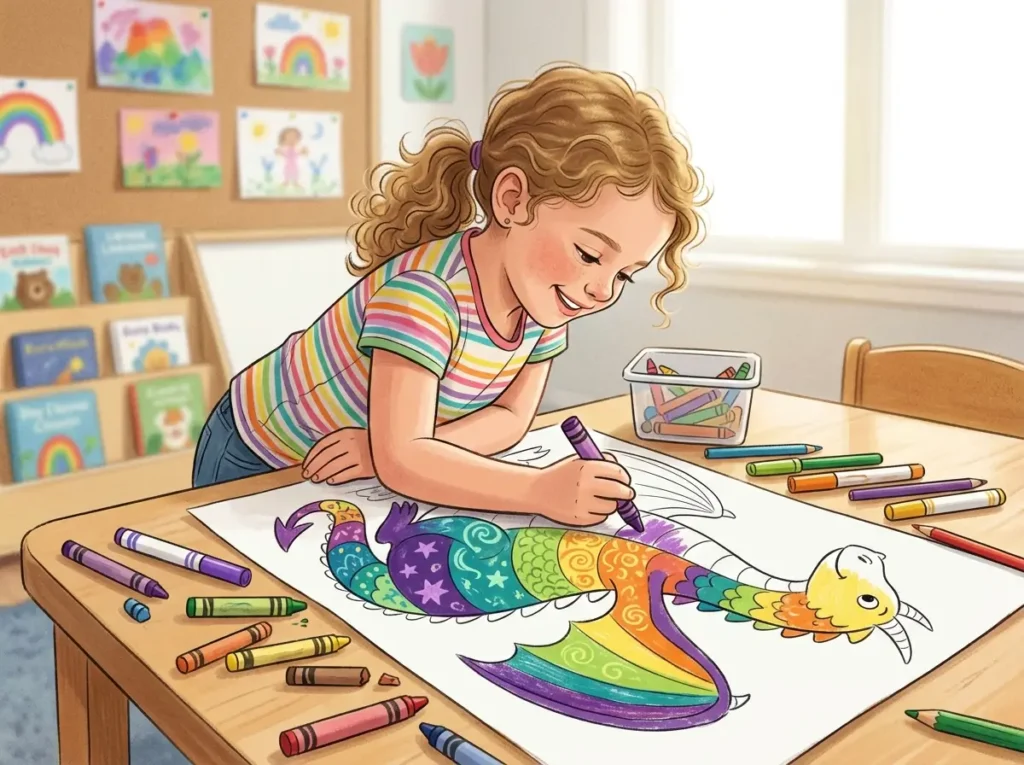
Decisions about which colors to use, whether to go bold or subtle, and whether to add some patterns as they go along – all contribute to the creation of an identity. Through coloring, children feel that their color choices matter and that someone actually cares. In other words, they begin to build their own identity and gain confidence through the process.
Finally, coloring pages can be an alternative emotional outlet for children who have difficulty speaking about what they are feeling at the moment. Although children may not know how to express their feelings, they can easily transfer them into pictures. Art therapy has been shown to help children deal with a variety of emotions, especially negative emotions.
4. Focus, Patience, and Concentration
We now live in a world where there is competition everywhere, vying for our children’s attention. Notifications beep, screens flash, and entertainment is just a tap away. It’s not conducive to our children sitting down to work on something for a while and going through it all the way.
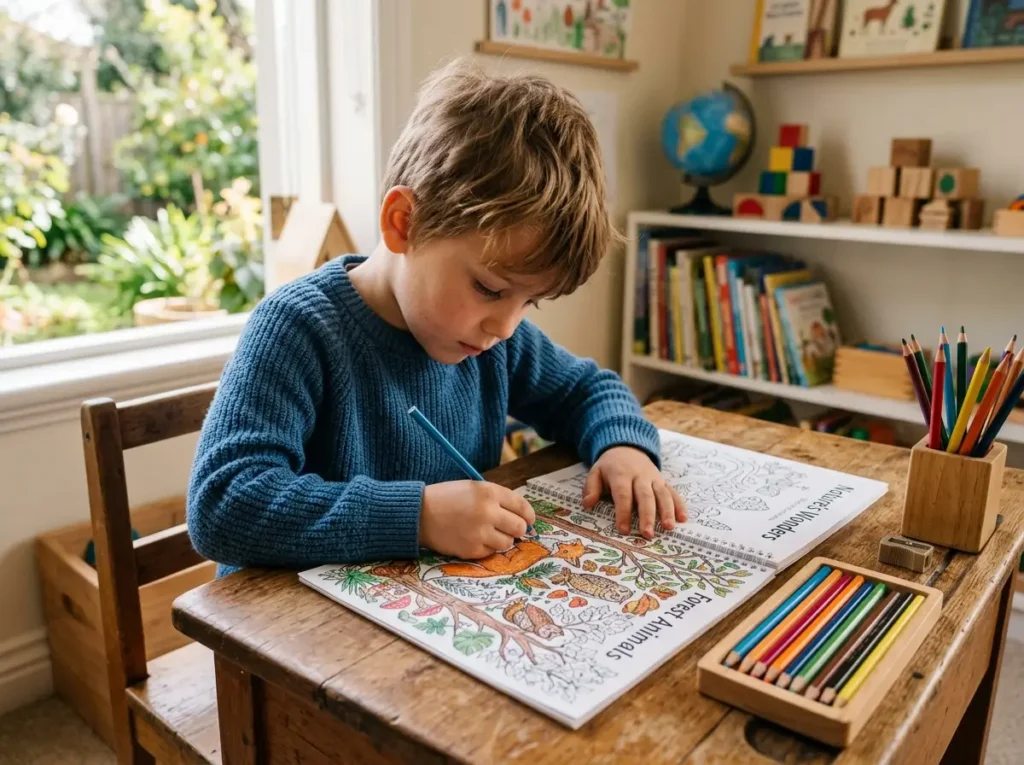
Coloring promotes attention in children. To color a page, especially a more complex one, a child needs to focus on their activity for some time. Furthermore, there is a beginning, a progression, and finally a climax – all of which teach perseverance and focus without much effort.
Research shows that children who participate in structured calming activities, such as coloring, tend to have longer attention spans. Children with attention problems can start coloring with simple pages and work their way up to more complex pages.
Moreover, this is one of the reasons why coloring is widely used in schools and other educational institutions.
5. Color Recognition and Early Academic Skills
For preschoolers, coloring pages provide an easy way to learn about different colors. Parents or guardians who sit with the child and explain colors, such as “We’re going to color this flower yellow, and this one red,” teach the child basic language skills in a fun environment.
As the child gets older, coloring pages offer a great opportunity to reinforce the subjects taught in preschool. Coloring pages on specific topics, such as numbers, letters, animals, shapes, and weather, provide visual and practical information that reinforces what the child is learning in school. For example, when a child sees the alphabet on a flashcard, she can reinforce her knowledge by coloring a page that includes “A is for Apple.”
Homeschooled children benefit greatly from these types of pages because they can be easily customized and used for any subject.
6. Emotional Regulation and Calm
If you’ve ever passed a coloring page to a fussy child and watched them slowly come to grips with the activity, you understand this point instinctively. Coloring can be a truly relaxing activity for children.
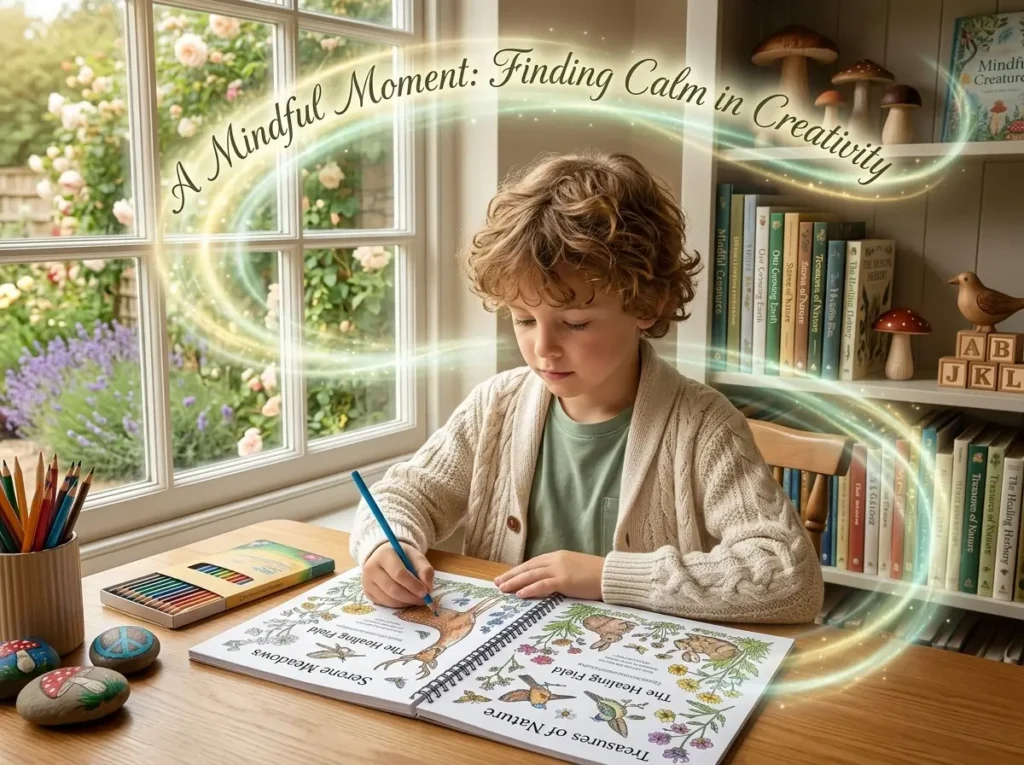
The repetitive, rhythmic action involved in coloring stimulates the part of the brain responsible for the relaxation response. It is similar to how many adults find they feel calm when engaging in activities like knitting or journaling. Children who are just learning to manage their emotions effectively find coloring a healthy way to regulate themselves.
Especially when faced with a transitional period – either at the end of the day or during a particularly stressful period – having access to coloring pages will give them a consistent way to regulate their mood.
Coloring pages can also help children who struggle with anxiety, according to some mental health professionals, who suggest that coloring pages can help anxious children calm down.
7. Building Confidence and a Sense of Accomplishment
It’s really rewarding to see your coloring page complete finally! You started with a bare outline, then slowly moved on to section by section until the picture was completely colored. This sense of accomplishment becomes an important part of the child’s experience.
Learning that effort brings tangible results is one of the key lessons that children learn when they complete a task. In addition, such an assignment creates a pattern of making something productive, which is important because there is always some pride in doing so. Support from parents who hang the coloring page on the fridge or praise a child’s work encourages this process.
In other words, small wins help a person develop a growth mindset.
8. Social Skills Through Shared Coloring
Coloring doesn’t have to be done alone. Children who color with others—whether at the table with siblings, at school, or during playdates—are developing social skills.
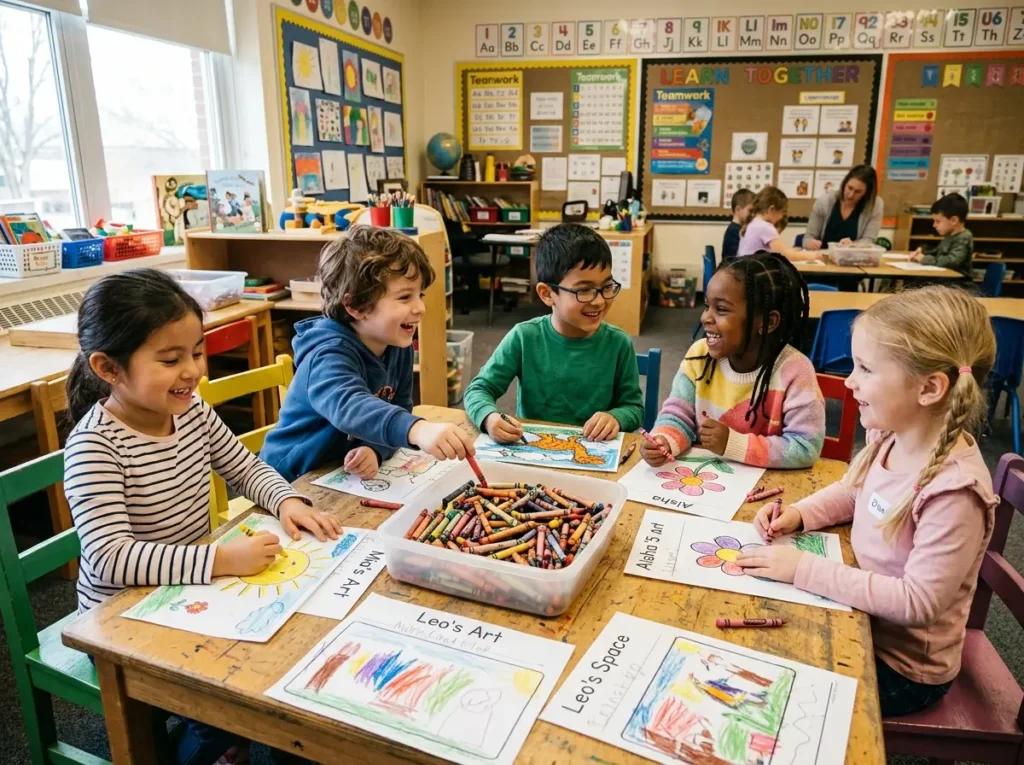
They learn how to share materials, take turns choosing a page, and respect each other’s artistic choices. They talk about what they’re doing, compliment each other’s art, and even work together on the same page. Socializing while coloring is educational; empathy, communication, and cooperation are all at work here.
Coloring together can be a great way for shy children. Having something to do and something to talk about takes some of the pressure off of “just talking.”
Choosing the Right Coloring Pages for Your Child’s Age
Coloring pages vary in quality and complexity, and it is important to choose something appropriate for your child’s developmental level.
- Ages 1-2: Simple drawings with large shapes and thick lines are recommended. Consider animals, simple objects, or geometric patterns.
- Ages 3-4: Add some details to the drawings, but still keep them simple. Characters, basic scenes, and other familiar images are fine.
- Ages 5-7: At this age, children will be interested in coloring pages that feature some of their favorite cartoons or games.
- Ages 8 and up: Complex drawings, such as mandalas, landscapes, and nature themes, begin to interest them.
The main idea is not to overwork a child because coloring will no longer be a joy. Coloring pages that are too complex lead to boredom and frustration. Thus, gradually increase the complexity of the drawings.
Final Thoughts
Coloring pages belong to that handful of things that are both fun and educational. Unlike games on a computer or phone, coloring doesn’t require any electricity, batteries, or special skills. It just requires a little effort and desire to sit down and draw.
It doesn’t matter the age of the child using coloring sheets – whether it’s a toddler who’s just learning to hold a marker or a seven-year-old who can easily color more complex pictures. Coloring develops fine motor skills, creativity, concentration, self-control, early academic skills, and confidence.
In other words, there’s nothing wrong with giving up the pill in favor of a coloring page now and then.